One Painting. Thousands of Names. A Permanent Record of Human Participation.
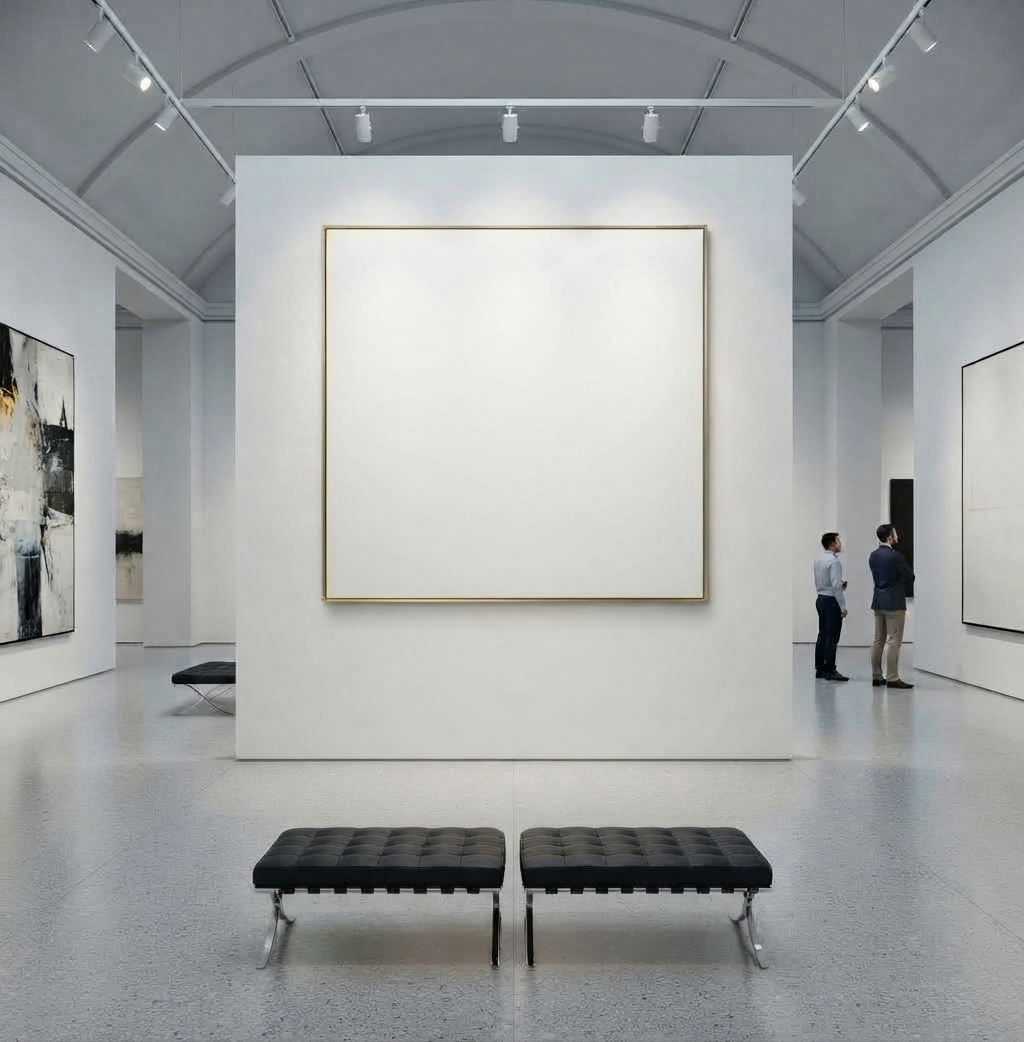
Imagine a completely blank canvas.
No names.
No words.
No signatures.
No history.
Just an empty surface waiting for something to happen.
The Human Record is an ambitious participatory artwork created by Miami-based abstract artist Blair Russell.
The concept is simple, but the possibilities are enormous.
Beginning with a blank original oil painting, people from around the world are invited to permanently contribute a name, word, phrase, family name, business name, organization, social media handle, slogan, or other meaningful identifying text directly onto the physical canvas.
One person at a time.
One contribution at a time.
One permanent mark at a time.
Over time, the painting will become a vast collection of human identities and expressions—a physical record created through the participation of potentially thousands, tens of thousands, or even hundreds of thousands of people.
It is part painting. Part archive. Part guestbook. Part historical record.
But unlike a traditional guestbook, the entries are not written on separate pages.
They become part of one original work of art.
Become Part of The Human Record
For a $1,000 contribution, you can become a permanent part of the artwork.
You can request virtually any name or identifying text you would like painted onto the canvas, subject to a 50-character text limit per contribution, excluding spaces.
You could choose:
- Your own name — Blair Russell
- Your family name — The Johnson Family
- Your business or company name
- Your organization
- Your artist or professional name
- A website address
- A meaningful word or phrase
- A personal slogan
- Your social media handle — @YourName
- Another name or expression that has personal meaning to you
The choice is yours.
Your selected contribution will be personally painted by Blair Russell in oil directly onto the original physical canvas.
It will not be printed onto a reproduction.
It will not exist only digitally.
Your contribution becomes part of the original artwork itself.
After your contribution has been completed, a photographic record of the artwork will document the painting as it continues to grow.
A Guestbook Unlike Any Other
Most guestbooks are eventually put away.
Most signatures disappear into old photographs, notebooks, websites, or digital databases.
The Human Record takes a different approach.
Instead of recording participation in a book, participation becomes the artwork.
Imagine looking at a painting and knowing that somewhere within its surface is the name of your family.
Your company.
Your child.
Your creative identity.
Your favorite word.
Your personal philosophy.
Or simply your own name.
And imagine that surrounding it are thousands of other contributions from people who may live completely different lives, in completely different places, and may never meet one another.
All of them exist together on the same physical object.
The canvas becomes the meeting place.
A Record That Grows One Person at a Time
The Human Record begins with a blank canvas.
Then someone becomes part of it.
Then another person.
Then another.
And another.
As participation increases, the empty surface gradually becomes populated with names, words, phrases, colors, and marks.
A name from Miami could eventually sit beside a family name from London.
A business from New York could appear near an artist from Paris.
A personal slogan could exist beside the name of a family that has participated from halfway around the world.
The possibilities are endless.
The artwork becomes a visual accumulation of human participation.
Every contribution adds another piece to the record.
Thousands of People. One Original Artwork.
The ambition of The Human Record is not to create thousands of individual paintings.
It is to create one extraordinary original painting containing the contributions of thousands of people.
If 100 people participate, the painting will contain 100 contributions.
If 1,000 people participate, it will contain 1,000.
If 10,000 participate, the physical canvas will contain the marks of 10,000 individual acts of participation.
And if the project ultimately attracts hundreds of thousands of participants, the painting could become an extraordinarily dense physical archive of names, words, and human expression.
Nobody knows exactly what it will eventually look like.
That uncertainty is part of the artwork.
The Artwork Is the Record
Traditional paintings generally document an artist’s vision.
The artist creates the composition.
The artist determines what belongs on the canvas.
The artist eventually decides that the work is finished.
The Human Record introduces another possibility.
What if the artwork itself could become a permanent physical record of the people who chose to participate in it?
The artist creates the framework.
The participants create the entries.
And the canvas becomes the permanent physical record of that collective participation.
Every contribution changes the artwork.
Every new name becomes another piece of its history.
Every additional layer makes the painting more representative of the people who have become part of it.
Names Become Part of the Painting
There is something fundamentally different about having your name painted directly onto an original work of art.
You aren’t simply purchasing an artwork.
You aren’t simply signing a guestbook.
You aren’t simply receiving a digital certificate or online acknowledgement.
You are physically contributing to an original painting.
Your name becomes part of its surface.
Part of its composition.
Part of its history.
Part of its story.
Future participants will add their contributions around yours.
Some names may eventually sit beside one another.
Some may overlap.
Some may become partially obscured by later layers.
Others may remain visible for decades.
The appearance of the painting will change as the record grows.
But your contribution will always have been there.
Imagine Seeing It Years From Now
As The Human Record grows, the artwork may eventually be exhibited at art galleries, museums, exhibitions, and other cultural venues throughout the world.
Imagine standing in front of the painting years from now.
Thousands of names, words, and phrases may cover the canvas. Layers of paint may have accumulated over time. Some contributions may be clearly visible. Others may be partially obscured. Some may have become almost impossible to distinguish beneath subsequent layers.
And somewhere within that painting is your contribution.
Your name.
Your family.
Your business.
Your slogan.
Your phrase.
You know that you helped create it.
You can look at the artwork knowing that your contribution exists somewhere within the physical layers of the original canvas—even if it is no longer completely visible.
That is part of what makes The Human Record different.
You are not simply purchasing something to hang on your wall.
You are helping create the artwork itself.
And if the painting is eventually exhibited around the world, you may one day stand before it in a gallery or museum and know:
“I am part of this.”
A Physical Archive in an Increasingly Digital World
We live in a world where enormous amounts of information exist digitally.
Names are stored in databases.
Photographs live on servers.
Messages disappear into social media feeds.
Digital identities can be created and forgotten in seconds.
The Human Record is deliberately different.
It is physical.
The names are not merely pixels.
They are not simply entries in an online database.
They are not comments beneath a social media post.
They are painted directly onto an original oil painting.
A physical object that can be seen, touched, exhibited, and preserved.
The project asks an interesting question:
What would it mean to create a physical record of thousands of people on a single work of art?
A Portrait of Participation
The Human Record is not intended to be a traditional portrait of humanity.
There is no requirement that every participant be famous.
No requirement that every contribution be important to anyone else.
The significance is personal.
For one person, it may be their own name.
For another, the name of their family.
For another, the name of a business they spent decades building.
For another, a word that represents something deeply meaningful to them.
Every contribution represents a decision:
I want to be part of this.
And collectively, those decisions become the artwork.
What Will The Human Record Ultimately Look Like?
Nobody knows.
That is one of the most interesting aspects of the project.
The painting begins with almost nothing.
Its eventual appearance will be determined by the people who participate.
Names may appear in different colors.
They may vary in size.
They may be placed at different angles.
Words may sit beside one another.
Names may intersect.
Layers may accumulate.
Colors may interact.
Patterns may emerge unintentionally.
As thousands of contributions accumulate, the artwork could become increasingly complex.
Eventually, individual contributions may become difficult to distinguish.
Earlier marks may exist beneath later layers.
The canvas could become densely covered with human identities and expressions.
The painting itself will become evidence of the passage of time.
A Visual History
The Human Record will also create something else: a visual history of its own development.
As the artwork progresses, photographic documentation can capture different stages of its existence.
The early painting will look dramatically different from the later painting.
The first contributions will belong to the earliest chapter.
Later participants will become part of subsequent chapters.
The photographs will preserve those stages.
Someone discovering The Human Record years from now could potentially look back through its visual history and see how an empty canvas gradually became a vast accumulation of human participation.
The painting will therefore exist simultaneously as an artwork and a record of its own creation.
How Large Could The Record Become?
There is no predetermined number of participants.
Perhaps there will be 100.
Perhaps 1,000.
Perhaps 10,000.
Perhaps 100,000.
Perhaps more.
The ambition is to allow the project to grow organically through participation.
As long as there is physical space and people continue wanting to become part of the artwork, the record can continue developing.
That means nobody can know exactly where the project will ultimately lead.
And that is intentional.
The final scale of The Human Record will be determined by the people who choose to become part of it.
One Canvas. Thousands of Stories.
Every person has a story.
Every family has a name.
Every business has a history.
Every individual has words that mean something to them.
The Human Record brings these otherwise separate identities together on one physical canvas.
A family name from one country can exist alongside a company from another.
An artist can appear alongside an entrepreneur.
A child’s name can eventually exist beside the name of someone who lived an entirely different life.
There is no requirement that the participants know one another.
They only need to share one thing:
They chose to become part of the record.
A Painting That Could Outlive Its Participants
Perhaps the most intriguing possibility is what happens decades from now.
What happens when the painting contains thousands of names?
What happens when some of the people whose names appear on it are no longer alive?
What happens when future generations look at the canvas?
They may be looking at a physical object containing the names of people who lived in different places, different decades, and different circumstances.
The painting could become a kind of visual time capsule.
A physical artifact documenting participation across time.
A record of people who chose to leave something behind.
And unlike a conventional guestbook, the record cannot simply be closed and placed on a shelf.
It is the artwork itself.
An Experiment in Art, Identity and Participation
At its heart, The Human Record is an experiment.
It asks:
Can a work of art become a permanent physical record of the people who chose to participate in it?
Can thousands of individual contributions become one artwork?
Can names and words become artistic material?
Can a painting function simultaneously as an artwork, an archive, a guestbook, and a historical record?
And perhaps most importantly:
What happens when the audience becomes part of the artwork?
There is no predetermined answer.
The project itself will provide the answer over time.
You Can Become Part of The Human Record
At some point, the blank canvas receives its first contribution.
Then another.
Then another.
Slowly, the empty surface begins to change.
The record begins.
Years from now, the canvas may contain thousands—or potentially hundreds of thousands—of individual contributions.
Every participant will have contributed something different.
But all of those contributions will share the same physical home.
One original painting.
One continuous record.
One extraordinary collection of human names, words, and identities.
And somewhere within it will be yours.